
The Pilates Truth | Issue No. 4: Stop Chasing the Body You Used to Have
The Pilates Truth — Issue No. 4
Stop Chasing the Body You Used to Have
By Lori Taranto
What if the goal isn't to get your old body back—but to build a body you love living in now?
Did I ever like my body?
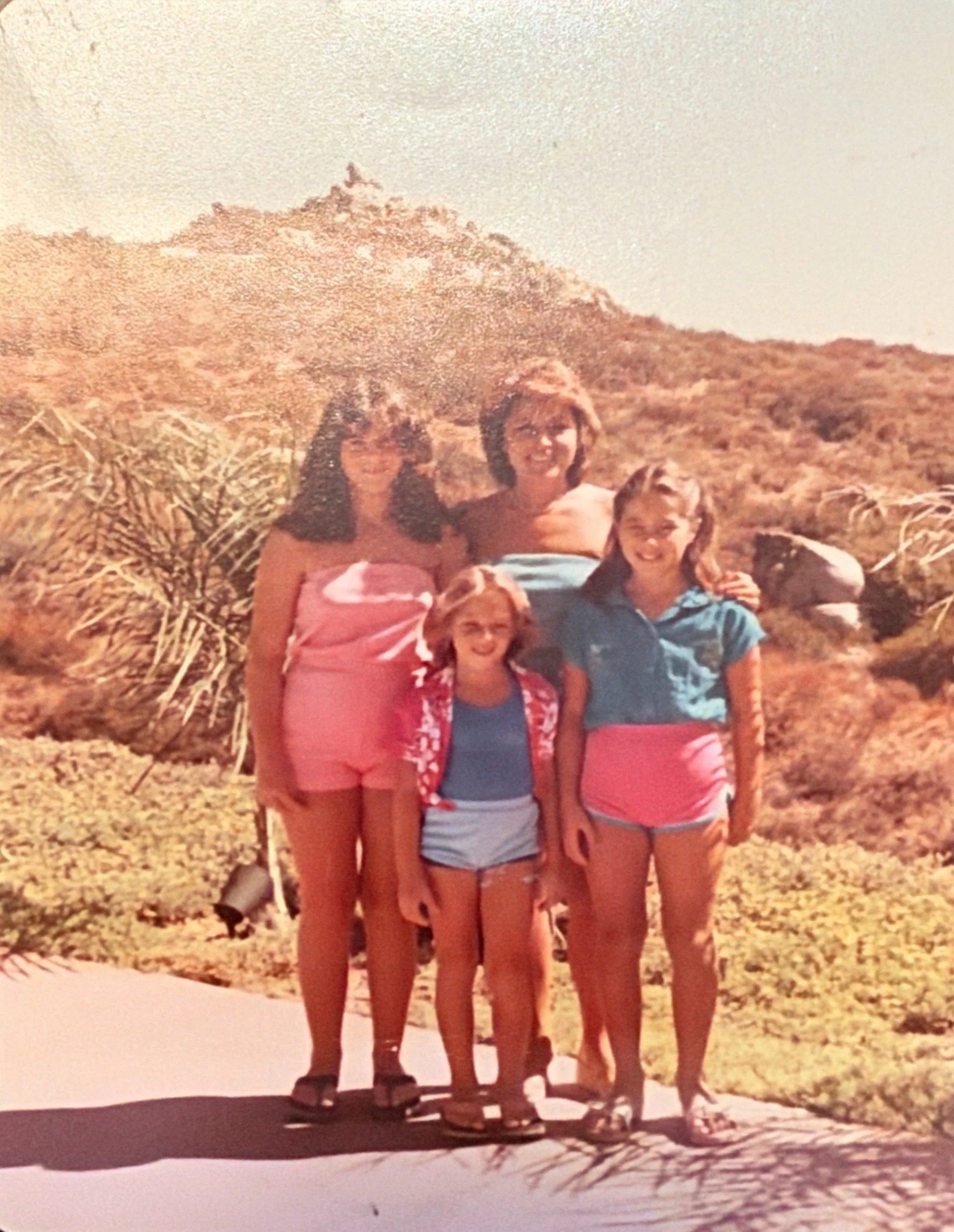
Lori Taranto, center front, child in the 1980s. Behind, Mother: Paulette, Left, sister, Gina, right; Sister, Lisa
Not even close.
I grew up in the 1980s, when being active looked a little different than it does today. There weren't organized club sports, endless after-school activities or carefully scheduled fitness routines. Being active meant playing outside with my friends, riding our bikes around the neighborhood, roller skating in my backyard, or finding something to do until the streetlights came on.
I even practiced hitting a tennis ball against our garage door.
I wasn't exactly Serena Williams. I eventually hit the ball hard enough to break my bedroom window.
I was always moving, but I wasn't thinking about it as exercise. It was just what we did.
I was also the youngest of three girls, so having two older sisters meant there was plenty of competition and plenty of teasing. We knew exactly what to say to get a rise out of each other, and bodies were certainly not off-limits as a topic.
My mother was very conscious of her weight long before her illness with dementia. There was always a scale in our bathroom, and she would get on it every day to check her weight.
So naturally, my sisters and I started doing the same thing at a very young age.
Looking back, I can see how much those little rituals can shape a child without anyone really realizing it.
My dad was a commercial tuna fisherman and would sometimes be out to sea for months at a time. When my mother got word that he was on his way home, she would go into what I now recognize as diet-and-exercise mode.
And sometimes, we joined her.
We'd eat Weight Watchers frozen meals and go to Jazzercise together.
Was she obsessed? Maybe.
Did it affect the way I grew up thinking about my body, food and exercise? Maybe.
But I don't look back at it with anger or blame. It was simply part of my childhood and part of the environment that shaped me.
Good or bad, those experiences became part of my story.
I wasn't a picky eater, although I definitely had to grow into eating vegetables. I ate what I wanted, stayed active and, for the most part, didn't think much about any of it.
But I did think about my body.
I was short and petite, with what I thought was a "pot belly." I know now that a lot of that probably had more to do with my posture than anything else, but at the time, I just knew my stomach stuck out.
I didn't look like the body I thought I was supposed to have.
And apparently, that feeling would follow me for a very long time.
The Body I Thought I Should Have
As I moved into my teens and twenties, my metabolism seemed to take care of me. I was active, ate what I wanted and didn't have to think too much about maintaining my weight.
I had my two children by the time I was 31 and, fortunately, lost the baby weight fairly easily.
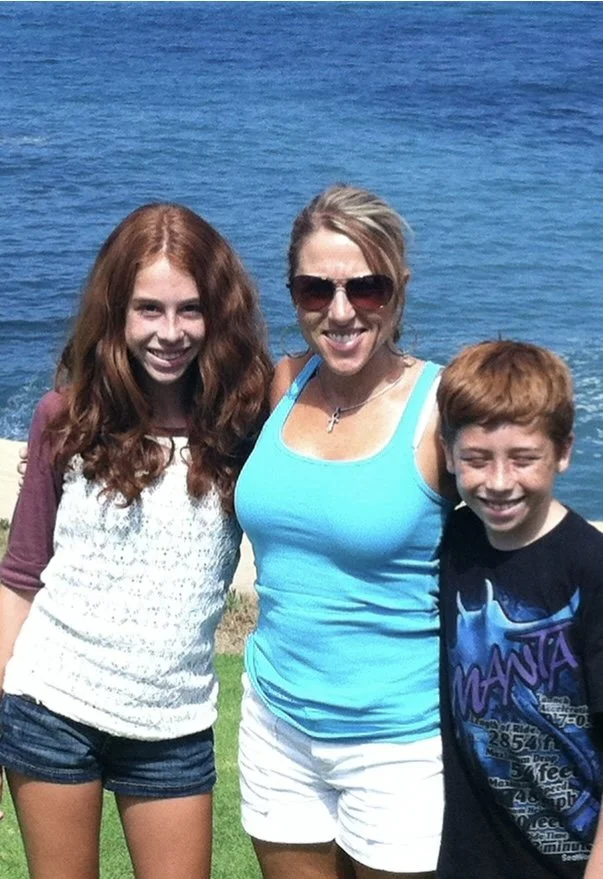
Lori Taranto young mother of two. 2013
Then, sometime in my mid-thirties, things started to change.
My body became softer. Losing weight wasn't as easy. I began to realize that I couldn't necessarily eat and move the way I had before and expect the same results.
This was also when I started taking my fitness seriously.
My mid-thirties through early forties were probably my prime fitness years. I joined a local gym, worked with a personal trainer for the first time and began taking group fitness classes throughout the week.
I learned how to strength train, how to challenge myself and, most importantly, how to make exercise a regular part of my life.
That period taught me something that has stayed with me:
If I wanted a certain quality of life, I had to make my health and fitness a priority.
Exercise couldn't just happen when I had extra time. It had to become part of my lifestyle.
But even then, I didn't necessarily look at my body with complete appreciation.
I'd start a workout phase or a diet, lose five pounds, get excited—and then reward myself with ice cream.
And honestly? I don't think the ice cream was the problem.
I wasn't sitting down with an entire gallon. I was having a couple of scoops.
Somewhere along the way, we've made enjoying food feel like a failure. I don't believe that anymore.
I believe in balance.
Looking Backward
One of the strangest things about getting older is looking at photographs of yourself from years ago.
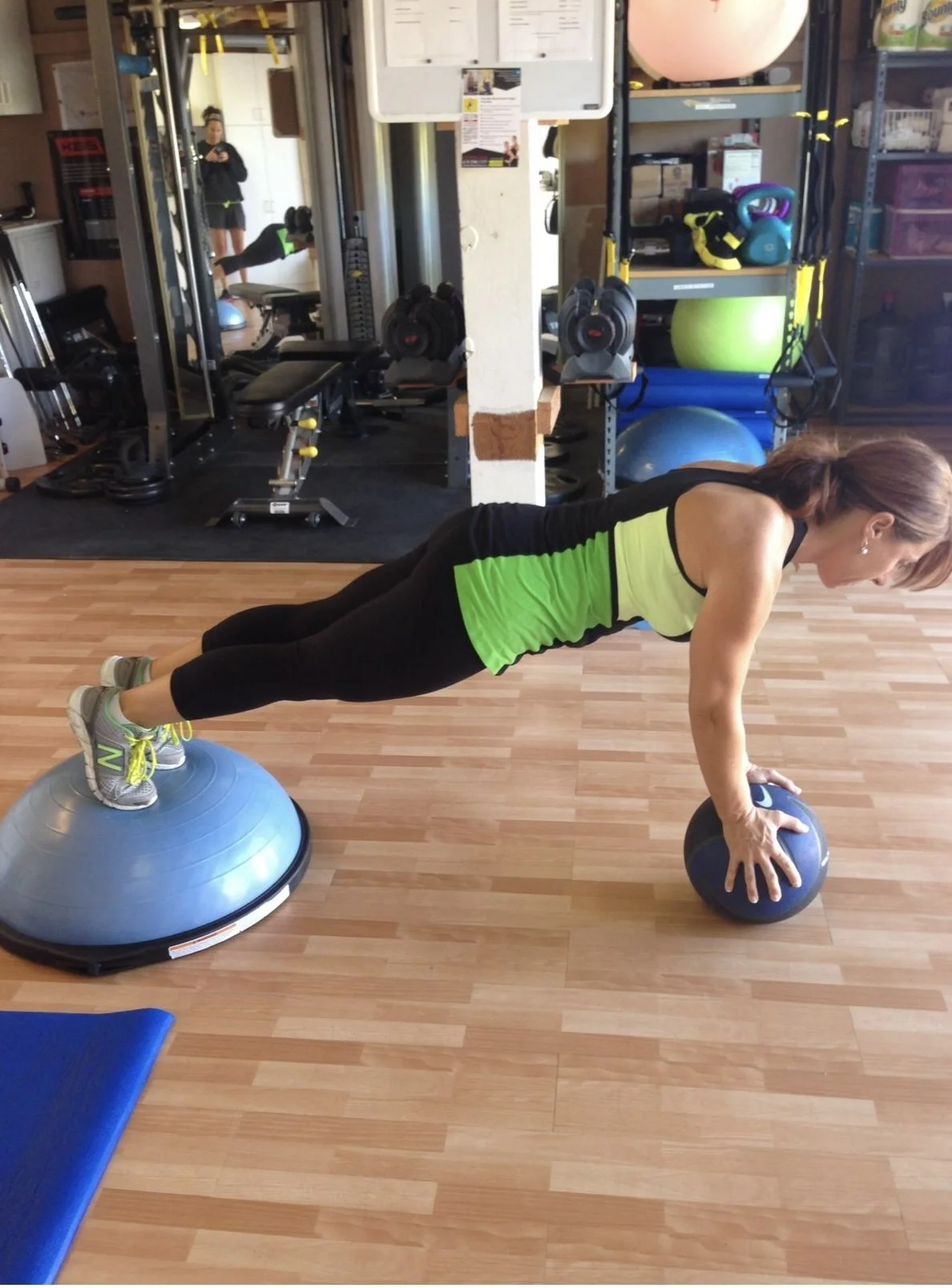
Lori Taranto in her garage studio in the early days, 2013.
You see a younger version of yourself and think:
Why wasn't I happy with my body then?
I look back at pictures from my twenties, thirties and forties and see things differently now.
At the time, I was always thinking I should be better. Thinner. Stronger. More toned.
There was always something I could improve.
And now I realize how easy it is to spend your entire life waiting for your body to become the version you think will finally be good enough—only to look back years later and wish you had appreciated the body you had then.
Growing up in the 80s, magazines, models, bikinis and being tan were a very visible part of the beauty culture around us, especially here in Southern California.
Thankfully, times have changed. The conversation around body image is broader and more compassionate, and body positivity has challenged many of the unrealistic standards women have grown up with.
But I don't think we have to love every inch of ourselves every day.
Sometimes I don't love how my clothes fit.
Sometimes I wish I were thinner.
Sometimes I look in the mirror and feel great.
We're human.
What matters is that those feelings don't become the measure of our worth—or keep us from living our lives.
Then Midlife Changed the Rules
My late forties and fifties have been the hardest years for me physically.
Menopause changed my body in ways I wasn't prepared for. I gained about 15 pounds, and at 4'11", that is not an insignificant amount of weight to carry around.
My energy dropped. My fatigue increased. And that combination doesn't exactly make you excited to exercise.
The frustrating part was that I wasn't overeating or living on junk food. Yet the weight kept climbing.
Eventually, I reached the point where I couldn't ignore it anymore.
I started talking with my doctors about my hormones, weight and energy. When I didn't feel like I was getting the answers I needed, I sought out a hormone specialist who took the time to look at the bigger picture.
After several rounds of lab work, supplements and prescriptions, I finally started feeling more like myself again.
I'm intentionally not going into every detail because everyone's experience is different. But I think it's important to acknowledge that sometimes there is more going on than simply "eat less and exercise more."
I used to think you needed to work out every day to get the results you wanted.
I don't believe that anymore.
And the old advice to "burn more and eat less" doesn't tell the whole story either.
Midlife requires a different conversation with your body.
More isn't always better. Punishing yourself isn't the answer.
It's Just Part of Getting Older. No Way.
I've heard versions of this throughout my life.
Your body changes.
Your metabolism slows down.
You're getting older.
Just accept it.
No way.
Yes, our bodies change. But accepting that your body will change is not the same thing as giving up on it.
What I do know is that the sooner you begin to believe you can make a difference in your future body, the better.
Not a perfect body.
Not your 25-year-old body.
Your future body.
The body you're going to need to carry you through the next chapter of your life.
And this matters because none of us knows exactly what that future will look like.
One of my fears is spending so much time waiting for the "second half" of my life—the time when I'll have more freedom to travel, explore and slow down—only to have a chronic illness or unexpected diagnosis change those plans into survival.
You can do everything "right" and life can still change your plans.
There are no guarantees.
That's exactly why I don't want to spend my healthy years obsessing over becoming healthy enough.
I want to take care of my body.
I want to eat well.
I want to exercise.
I want to get stronger.
But I also want to have dinner with friends. I want the ice cream. I want to travel. I want to enjoy my life now.
Take care of yourself—but don't forget to live.
What Am I Actually Preparing For?
I'm a people watcher. I notice bodies everywhere I go—big, small, young, old, fit, overweight.
And if I'm being completely honest, I still compare myself.
I think most of us do.
But the definition of the "ideal" body keeps changing. Every generation has its version of what we're supposed to look like.
Our bodies don't care much about trends.
So I've started asking myself a different question:
Is this good for the body I'm going to have later?
If something promises a quick physical change but could compromise my strength, energy, mobility or health over time, is it worth the risk?
I don't want to make decisions about my body based only on how it looks today.
I want to think about the woman I'm going to be later.
Because the body you have today is the body you're building your future with.
The Body I Want Now
Today, my goals are very different from the goals I had when I was younger.
I want my body to carry me into my eighties and, if I'm lucky, my nineties.
I want to travel.
I want to carry my own luggage.
I want to walk around a city I've never seen before without worrying about falling.
I want to have the strength and balance to get down on the floor and play with my future grandchildren—and get back up.
I want to live independently for as long as I possibly can.
I want the energy to do the things I don't have time to do right now as a full-time business owner.
I still want to feel confident in my clothes.
I want to take care of my skin and age naturally.
I want to grow older gracefully.
And I've changed what "gracefully" means to me.
It doesn't mean trying to look 40 when I'm 60. It doesn't mean fixing every wrinkle or fighting every sign of aging.
It means staying engaged with my life.
It means being strong enough to participate in it.
What New York Reminded Me
After strolling around New York this past week, I have one more thing to add to this conversation:
Taking good care of your body really does give you the vessel you need to live your life.
New York made that very real for me.
We walked. A lot.
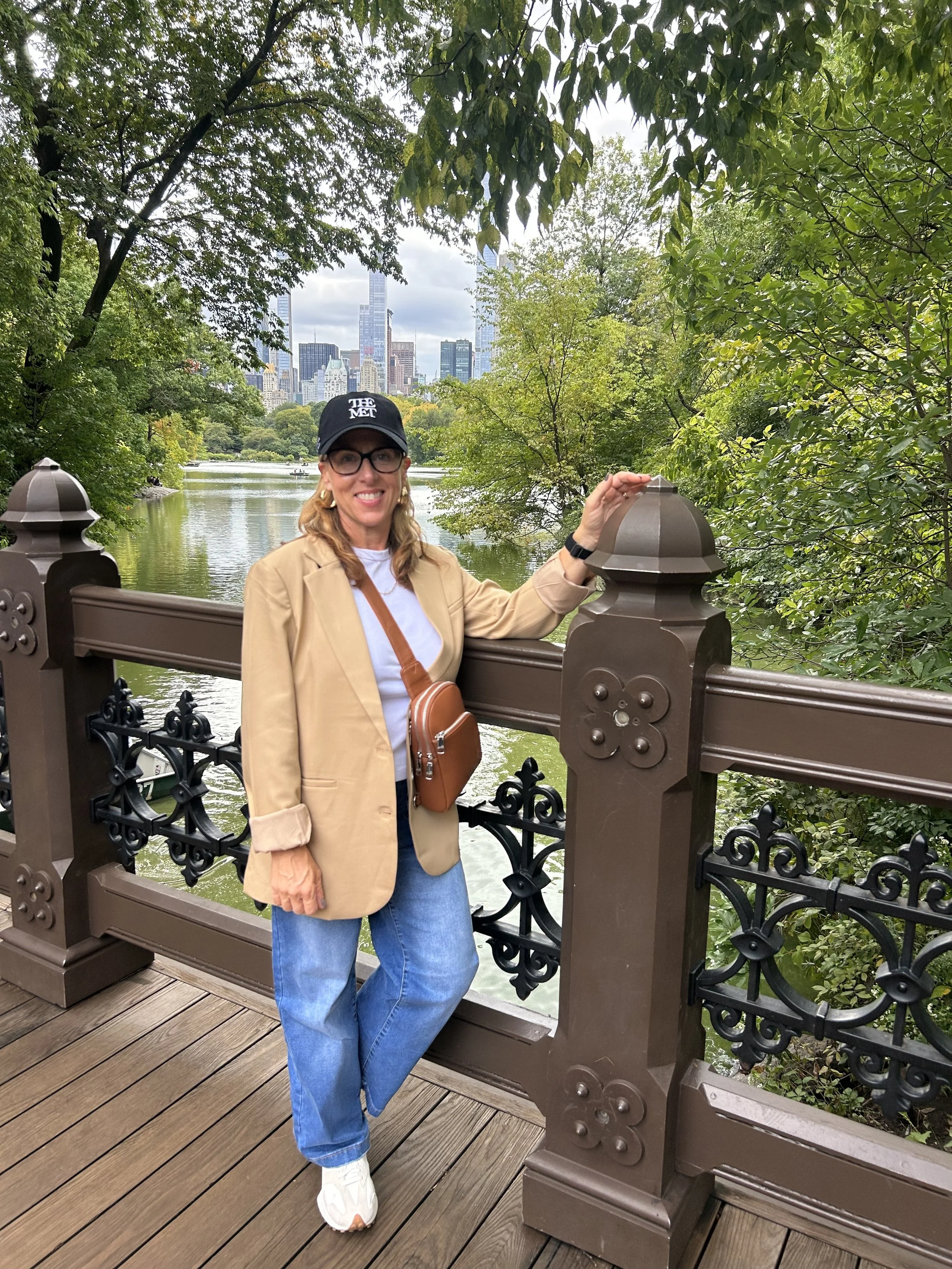
Lori Taranto in Central Park, New York City, September 2026.
We walked blocks and blocks, climbed subway stairs, stood in crowded stations, navigated uneven sidewalks, carried bags, climbed more stairs, sat, stood and then did it all over again the next day.
And as I looked around at the incredible diversity of people in the city—locals and visitors of every age, shape, size and ability—I found myself thinking about something I don't think we talk about enough:
How much does your body determine where you can go and what you can experience?
Travel can make you aware of your physical limitations in ways everyday life sometimes doesn't.
Can you walk for hours through a city you've never seen before?
Can you carry your luggage?
Can you manage a flight of subway stairs when there's no elevator nearby?
Can you get up from the ground, navigate unfamiliar streets and keep going when your feet are tired?
And if the answer is no today, what could you start doing now to change that for the future?
That doesn't mean we all need to become marathon runners or spend our lives chasing physical perfection.
It means thinking ahead.
How do you expect your body to serve you in the years to come?
And then, just as importantly:
Are you doing what you can today to meet those expectations?
There was something powerful about realizing that the strength, balance, mobility and endurance I've worked on for years weren't just numbers on a workout schedule.
They were giving me the freedom to experience my life.
That, to me, is the real payoff.
Not a smaller waist.
Not a number on the scale.
Not looking younger than I am.
Freedom.
The ability to say yes to the trip. Yes to the walk. Yes to the adventure. Yes to whatever comes next.
That's the body I want to keep building.
Why This Matters to Me
I've spent more than a decade in the Pilates and fitness industry.
When I started teaching out of my garage in 2012, I wasn't thinking about what my business would look like all these years later.
I was simply building something I believed in.
Over the years, I've had the privilege of watching clients move through their own seasons of life. I've watched women become stronger, regain confidence, work through injuries and continue moving forward.
And I've watched them age.
Some of them have shown me that getting older doesn't have to mean giving up the things you love. They've taught me what it can look like to remain active, independent and engaged with life well into your later years.
They have become some of my greatest teachers.
That's the kind of aging I want for myself.
And until it's my turn to slow down, I'm dedicated to helping my clients build the strength, balance, mobility and confidence they need to keep doing the things they love.
Not just today.
For all the years ahead.
Stop Chasing the Body You Used to Have
Maybe the better questions aren't about getting your old body back.
What do you want your body to be able to do for you 10, 20 or 30 years from now?
Are you taking care of your body for how you want it to look—or for how you want to live?
Can you work toward feeling strong, healthy and confident without making perfection the goal?
And are you allowing yourself to enjoy the life you're taking care of your body for?
The perfect body doesn't exist.
And neither does the perfect future.
Take care of the body you have today. Build the strength you'll need later. Make choices that support the life you want to live.
But don't spend your whole life preparing to live it.
Live some of it now.